Italy offers 14 million euros to the Republic of Moldova for strengthening social protection and energy resilience in Moldova. The support, granted through the United Nations Development Program, aims to renovate the public infrastructure of social services centers. Additionally, the funds are provided for the continuation of the “Help at the Meter” cold season compensation program, as well as for the expansion of smart metering, reports IPN.
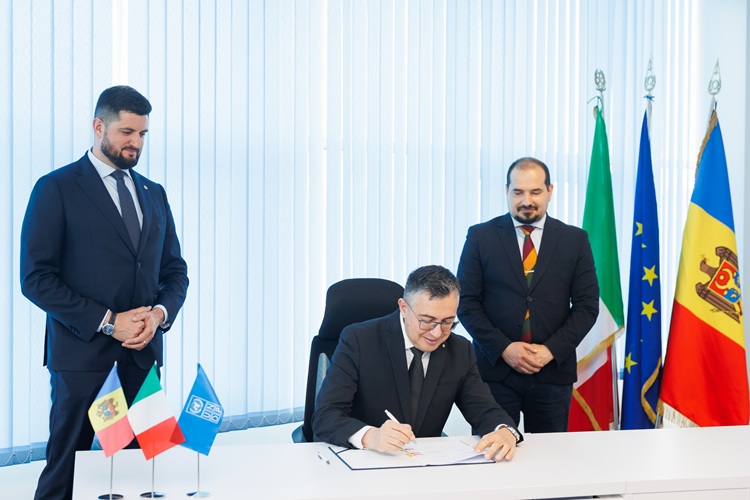
On Thursday, in Chisinau, the financial agreement between Italy and UNDP was signed. The document complements the 20 million euros support allocated in November 2023 and January 2025. “This new commitment strengthens Italy’s consistent support for the efforts of the Republic of Moldova to support its most vulnerable citizens and advance the reform agenda,” said the Italian ambassador to the Republic of Moldova, Lorenzo Tomassoni.
Out of the provided funds, two regional centers for social services will be renovated and equipped according to a modern model of a single-window social service delivery, which will integrate energy-efficient technologies and beneficiary-centered design principles.
In addition, Italian support also targets the government program for energy compensations “Meter Aid” by ensuring the functioning of the Energy Vulnerability Reduction Fund (FRVE) and the dedicated Call Center – supported by Italy starting from 2024 – as well as providing compensations for vulnerable energy households.
At the same time, due to additional funding provided by the Government of Italy, the smart meter pilot project, currently being carried out by the Ministry of Energy, will be expanded. By the end of 2027, the number of installed smart meters will reach 100 thousand, which represents 7% of the total 1.4 million electricity consumers.
With the support of Italy and UNDP, the Republic of Moldova will further implement an integrated set of measures to strengthen cybersecurity and climate resilience in the energy sector. These include equipping energy system operators with real-time detection systems, as well as measures to protect against cyber and climate risks.