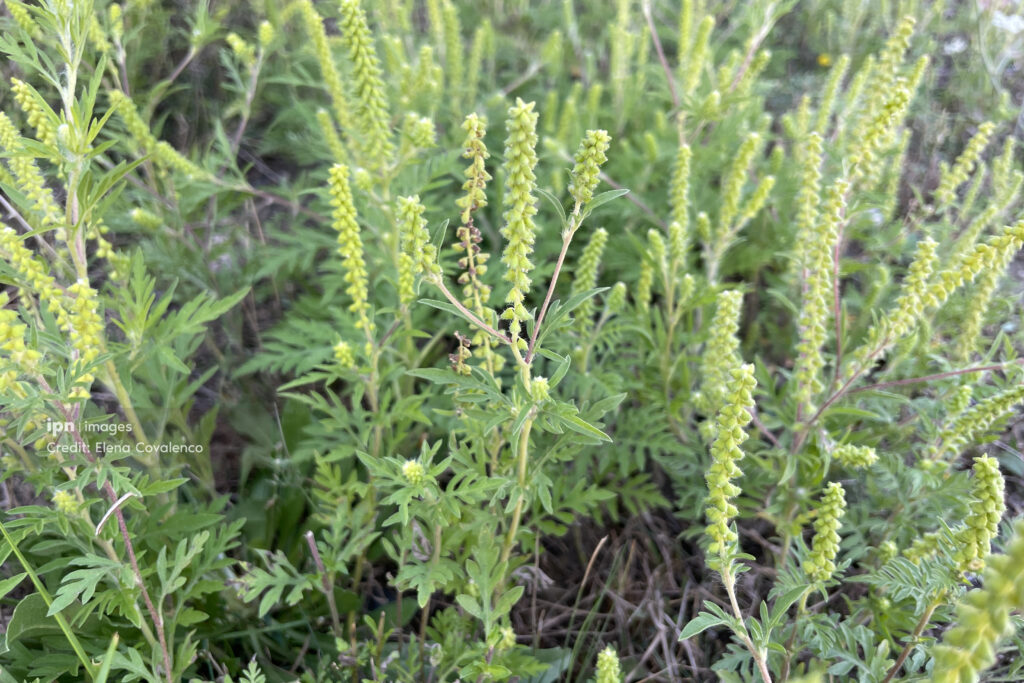
Landowners and local authorities are urged to intervene in combating ragweed through repeated mowing, uprooting, and, where appropriate, herbicide application. Authorities warn that, from July to September, ragweed poses a major health risk, as its pollen is one of the strongest allergens and can cause severe reactions, especially in sensitive individuals, reports IPN.
The Ministry of Health points out that the plant has spread rapidly in recent years throughout the entire territory of the Republic of Moldova, including in localities and along roadsides. The expansion of the plant is favored by climate changes, pollution, and drought. A single plant can produce up to eight billion pollen grains and approximately 40 million seeds, which retain their germination capacity for up to 40 years.
According to specialists, ragweed allergy manifests through repeated sneezing, nasal congestion, watery nasal secretions, tearing, and eye itching. In some cases, the allergic inflammation can evolve into asthma, with symptoms such as dry cough, breathing difficulties, and a feeling of pressure in the chest.
The Ministry of Health recommends that people presenting such symptoms consult an allergist and avoid self-medication. At the same time, the population is urged to limit exposure to pollen during the plant’s flowering period, especially in the morning and on dry, windy days.
At the same time, the authorities are calling on citizens to notify the city halls, the Environmental Protection Inspectorate, the National Food Safety Agency and the National Public Health Agency to report the presence of ragweed.