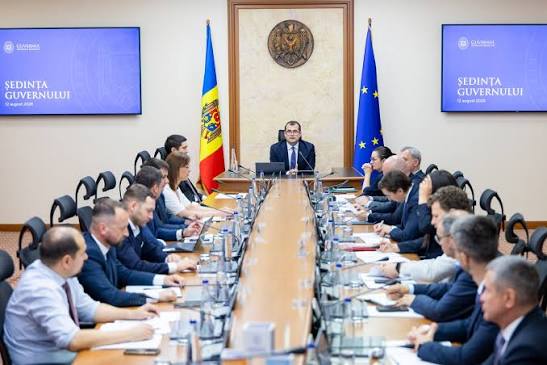
The government has approved the establishment of a state of emergency in the hydrological and energy sectors for 60 days. Authorities cite the hydrological deficit, the amplification of regional risks, and pressures on energy markets, in the context of the approaching cold season. The proposal is set to be examined today by Parliament, reports IPN.
The Director of the National Crisis Management Center, Serghei Diaconu, stated at the executive meeting that approximately 59% of the Republic of Moldova’s electricity needs for this winter are expected to be covered by imports. During peak hours, the demand is estimated at 440-450 MW, while the guaranteed import capacity is around 360 MW.
In the case of natural gas, over 90% of the requirement for the cold season is already contracted. However, the increase in international prices puts pressure on the financial resources needed for purchases and stockpiling.
According to Diaconu, the risks in the energy sector are closely related to the hydrological situation. The low water level in the Nistru and Prut can affect the population’s supply of drinking water, and drought reduces the production of hydroelectric power. “A problem in one sector can immediately amplify the problem in the other”, he stated.
The Minister of Energy, Dorin Junghietu, has warned that developments on international markets create risks of price increases for consumers. He specified that, at present, a new tariff or the date of a possible adjustment cannot be announced, this being subject to examination by the National Agency for Energy Regulation based on justified costs.
Prime Minister Vasile Tofan mentioned that several risk factors have overlapped, including the war near the Peach Gulf, which affects gas exports from Qatar, the destruction of some refineries following the war in Ukraine, and the drought that has reduced hydroelectric production. Under these conditions, the Government is expected to revise its plans regarding compensations for the cold period, due to pressures on gas prices.
If the Parliament approves the establishment of the state of emergency, the CNMC will be able to impose temporary and mandatory measures to prevent energy and fuel shortages, maintain stocks and imports, protect consumers, and ensure the continuity of energy and water supply. Among the measures envisaged are the prioritization of energy supply to domestic consumers, essential public services, and critical infrastructure, as well as the temporary limitation of non-essential uses of water.
The decision to declare a state of emergency was announced on Monday following a meeting of the National Security Council. President Maia Sandu stated that the measure is necessary to enable authorities to intervene quickly in unforeseen situations—such as a continued drop in the Dniester River’s flow, the need for urgent fuel purchases, or a further rise in fuel prices.